Here's a detailed explanation of the needle bar and bristle brush commonly used in a woolen mill: vario bars
Pinstrips:The needle bar is a tool comprised of numerous Pin strips used for operations on the surface of wool textiles. Each needle typically has a pointed end, usually made of metal, which can be used to penetrate yarn or fabric. The design of the needle bar may vary depending on the requirements but generally consists of many slender and sturdy needles arranged neatly by being fixed onto a frame or base.vario bars
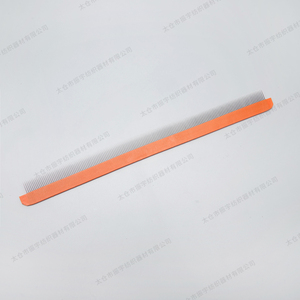 In a woolen mill, the needle bar is commonly used for the following operations:
Knitting: The needle bar is used to create knitted fabrics on knitting machines. By combining the needle bar with the fabric material, a knitted structure of wool fabric can be produced.vario bars
Carding: The Pinstrips is also used for carding fibers. In this process, the needle bar is employed to stretch and separate the fibers, making them smoother and more even.
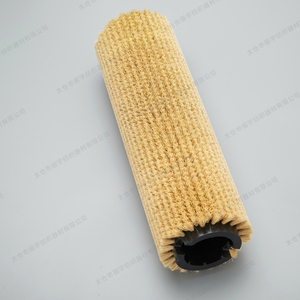
Brush:Thebrush is a tool used for handling wool textiles, consisting of numerous fine and elongated bristles made of either natural hair or synthetic fibers. The design of the bristle brush can vary based on specific processing requirements and may feature bristles of different lengths and densities.
In a woolen mill, the bristle brush is typically used for the following operations:vario bars
Finishing: The bristle brush is commonly employed to finish the surface of wool textiles. By gently brushing the fabric, it helps achieve a smoother and neater appearance, removing impurities and loose fibers.
Static Removal: The bristle brush can also be used to eliminate static on the surface of textiles. Static electricity can cause fabric to attract dust and other particles, and the use of a bristle brush effectively addresses this issue.
 Summary:The needle bar and bristle brush are commonly used tools in a woolen mill for spinning and finishing wool textiles. The needle bar is used for knitting and carding operations, while the bristle brush is employed for finishing and static removal. These tools play a crucial role in woolen mills, facilitating the production of high-quality wool fabrics.

 In a woolen mill, the needle bar is commonly used for the following operations:
 Summary:The needle bar and bristle brush are commonly used tools in a woolen mill for spinning and finishing wool textiles. The needle bar is used for knitting and carding operations, while the bristle brush is employed for finishing and static removal. These tools play a crucial role in woolen mills, facilitating the production of high-quality wool fabrics.
